

What Is Fiber Laser Engraving? (And Why It's Not the Same as Hand Engraving)
When people find out I make custom engraved accessories, the first thing a lot of them say is "oh, so you hand engrave everything?" And I get it — the word engraving conjures up an image of someone bent over a jeweler's bench with a tiny tool, carefully carving letters by hand. That's a real craft and I have genuine respect for it. But it's not what I do.
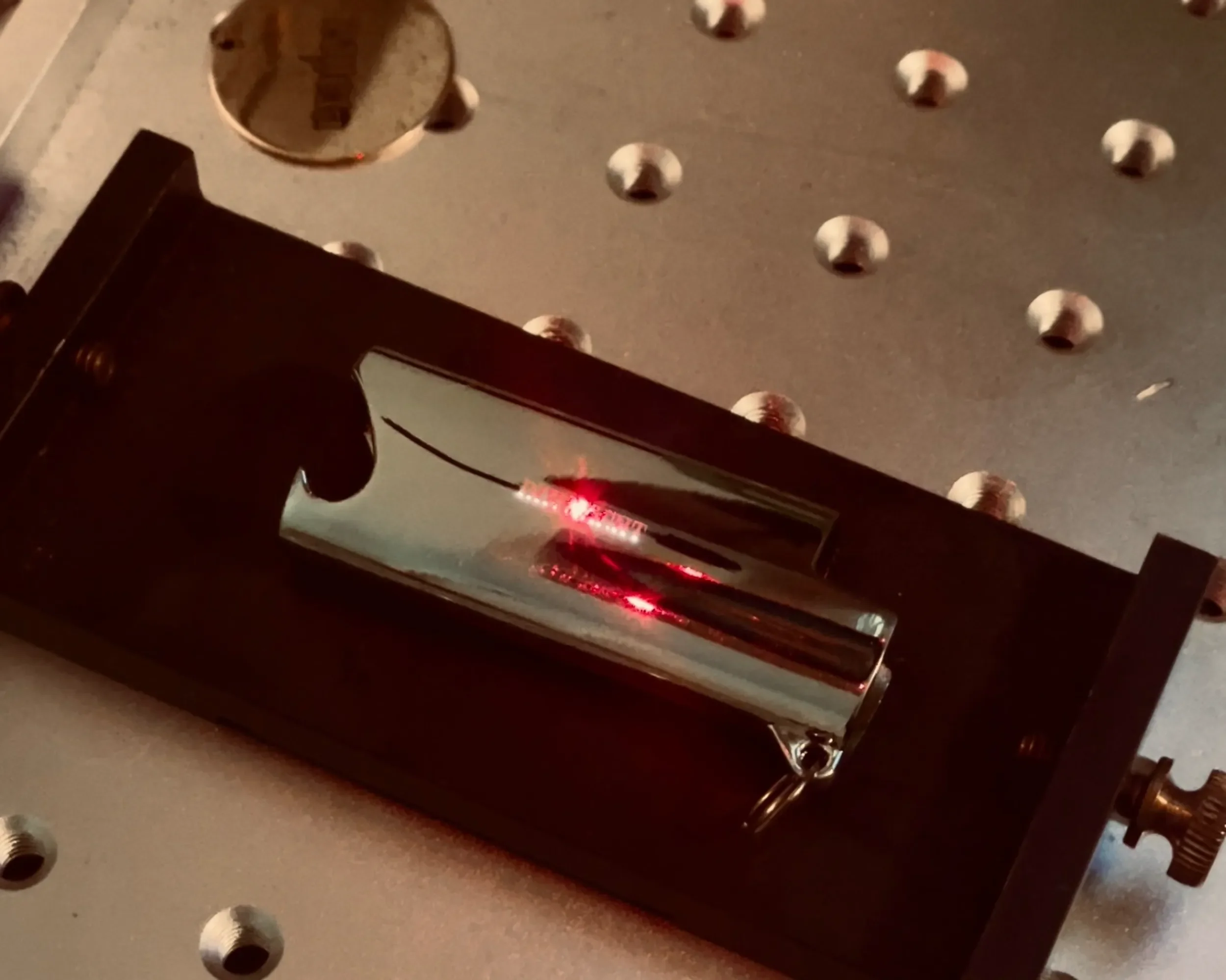
What I do involves a 30-watt Raycus fiber laser that sits on my desk in Los Angeles and burns designs into metal with a focused beam of light. It's precise, it's permanent, and once you understand how it works, you'll never look at an engraved piece the same way again.
What Is a Fiber Laser, Actually?
A fiber laser generates a high-powered beam of light through a fiber optic cable and directs it at a surface with extreme precision. The beam moves across the material in a programmed pattern — your design, your font, your graphic — removing or altering the surface at a microscopic level.
The result is permanent. Not printed, not stamped, not filled with ink. The material itself is changed. That's why laser engraving doesn't fade, rub off, or wear down the way other personalization methods can.
My machine is a 30-watt Raycus fiber laser — compact enough to sit on a desk, powerful enough to engrave brass, stainless steel, titanium, silver, gold, platinum, and aluminum. It can even mark ABS plastic, though I'll be honest, I haven't had a reason to try that yet.
What Can a Fiber Laser Engrave?
The short answer: metals and some plastics. The longer answer involves understanding why.
Fiber lasers operate at a wavelength that is specifically absorbed by metals. That's what makes them so effective on jewelry, hardware, and industrial parts. The metals I work with regularly include brass, stainless steel, aluminum, and occasionally silver — all the materials you'll find in Babe's Hardware products.
What fiber lasers are not for: wood, acrylic, leather, or most organic materials. For those you want a CO2 laser, which operates at a different wavelength that gets absorbed by non-metals. CO2 lasers are the ones you typically see making wood signs — they're great at that, but they're also usually large machines that take up a lot of floor space. One of the things I genuinely appreciate about a fiber laser is that mine fits on my desk. It's a serious piece of equipment that doesn't require a dedicated workshop.
UV lasers are a third category and they're interesting — they can actually cut through materials like acrylic cleanly, which is how you get those crisp acrylic keychains and pet tags you see everywhere. Each laser type has its lane.
Engraving Is Not One-Size-Fits-All
This is where it gets more nuanced than most people expect. The settings I use — power, speed, number of passes — change depending on the metal and the result I'm going for.
Here's a real example. If I'm engraving a black or dark color-plated metal, I don't actually want to go deep. I only want to remove the plating so the raw metal underneath shows through. That contrast — bright metal against a dark surface — is the look. For that I'll run the power at around 25, set the speed between 750 and 1000, and do a light engraving pass followed by a cleaning pass. Barely touching the surface.
If I want a deep engraving in brass — something with real depth you can feel — that's a completely different approach. Power up to 90, speed down to around 500, and I'll run 5 or 6 passes before finishing with a low-power cleaning pass. More time, more heat, more material removed.
Some metals just need more work than others. Stainless steel, for example, is harder and more reflective than brass, so achieving the same depth takes more passes. Part of what makes engraving a skill isn't just running the software — it's knowing what each material needs.
Can a Fiber Laser Cut Through Metal?
Technically, yes. Practically, it depends on how much time and power you have.
I actually tried cutting small heart shapes out of a lighter case once. It worked — eventually. It took over 300 passes. For a tiny shape. A 30-watt fiber laser can do it, but it's not really what the machine is built for. To cut through metal efficiently you'd want something in the 60 to 100-watt range, purpose-built for cutting. That's a different machine and a different price point.
For what I make — engraved designs on lighter cases, keychains, pet tags, jewelry, and carabiners — 30 watts is exactly right.
So What Makes It Different From Hand Engraving?
Hand engraving is done with a graver — a small cutting tool pushed or tapped across metal by hand. It requires years of practice, produces one-of-a-kind results, and has a warmth and variation to it that's genuinely hard to replicate. It's also slow, and the range of fonts and graphics you can produce is limited by what a human hand can execute.
Fiber laser engraving is different in almost every way. The design is created digitally, the machine executes it with consistency, and the same file can be run on a hundred pieces with the same result every time. What you gain is precision, repeatability, and range — 10 font options, multiple graphics, exact placement every time.
What stays the same in both methods: the engraving is permanent, it's in the metal, and it doesn't come off.
What That Means for Your Order
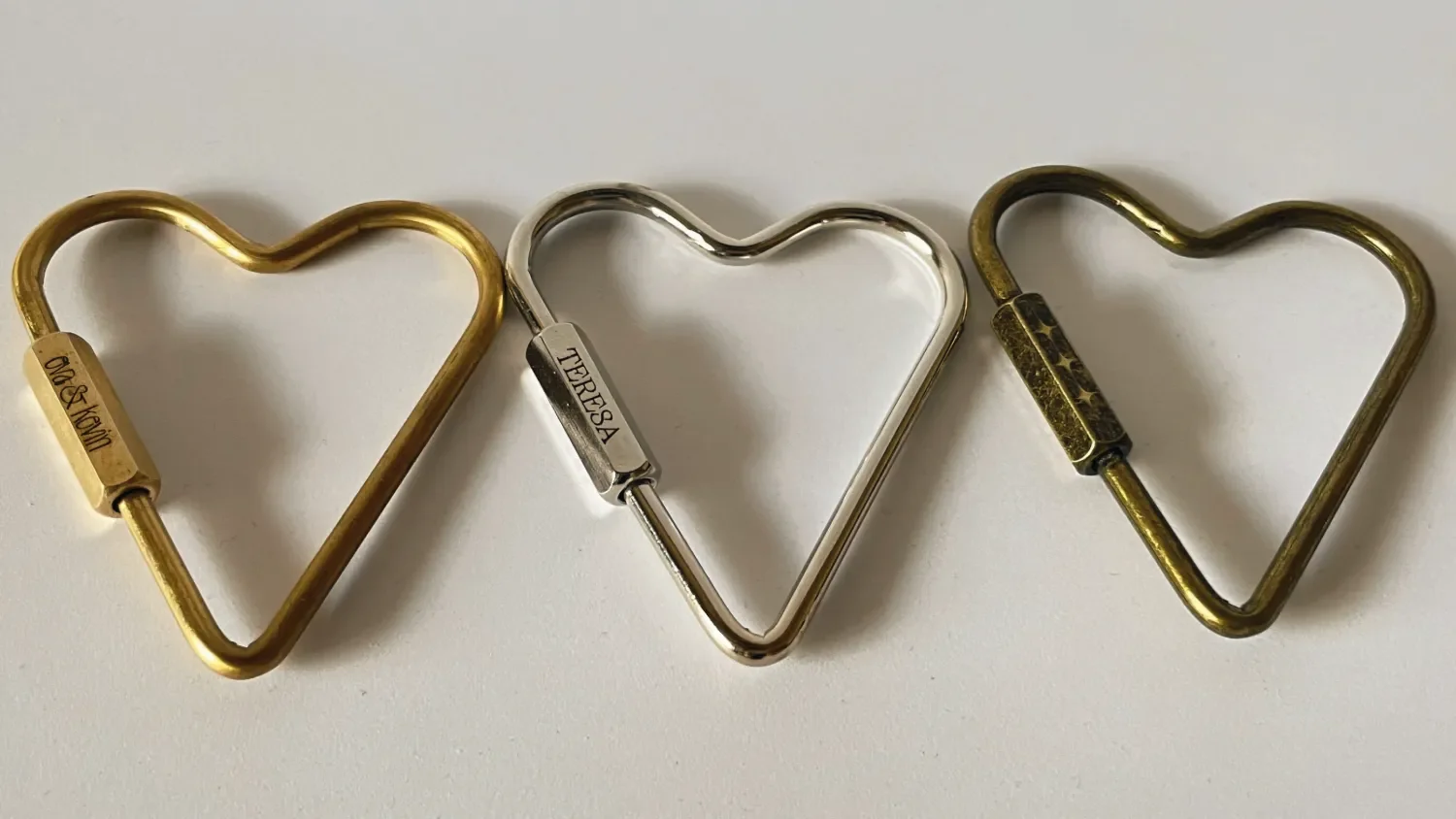
When you order a custom piece from Babe's Hardware, the design is laser engraved directly into the metal using a fiber laser — not printed, not filled, not applied on top. The settings are adjusted based on the specific metal and finish of your piece to get the right depth and contrast. Some orders take one pass. Some take six. Either way, the result is the same: clean, permanent, and exactly what you ordered.
Browse the full shop at babeshardware.co